


Every year it goes about the same. The bins come down from the attic on a Saturday, someone finds the tree stand, and by mid-afternoon the living room is covered in tissue paper and half-untangled lights with no real plan for any of it. If you've ever wondered how to decorate for Christmas without losing a whole weekend to that kind of chaos, the answer is mostly about order: what you decide first, and what you leave for later.
This guide walks through that order. It starts with timing and prep, moves to color, then the tree, then the rest of the house room by room, and ends with the greenery, small arrangements, and lighting that pull it all together.
We've written it for anyone hosting at home, and for the florists and planners who style other people's spaces in December. If you need supplies along the way, the Jamali Garden Wholesale Christmas Decorations collection has the ornaments, garlands, wreaths, and picks mentioned throughout.
Key Takeaways
- Start planning about eight weeks out, and do the bulk of the decorating in November so December stays calm.
- Clear your surfaces and go through the decorations you already own before buying anything.
- Pick two or three colors and repeat them in every room you decorate.
- Build the tree in layers: lights, then ornaments from largest to smallest, then picks, garland, and the topper.
- Give each room one or two focal points instead of decorating every surface.
- Use greenery on the mantel, the stair rail, and the table to tie the rooms together.
- Finish with warm, low lighting and a few personal pieces. They do more for the mood than extra decorations.
When Should You Start Preparing for Christmas?
Earlier than feels necessary. Anyone asking how to prepare for Christmas in the second week of December is already behind, and it shows in the result: rushed trees, last-minute orders, a mantel thrown together the night before guests arrive. Spreading the work over roughly eight weeks means no single weekend has to carry all of it.
Eight Weeks Before Christmas: Start Planning
Late October is for planning, not shopping. Set a budget you can live with first. A common split is to put around 20 percent of your total holiday spending toward decor, which leaves the rest for gifts, food, and travel.
Then open the bins. Lay out what you have, plug in every strand of lights, and check artificial trees, wreaths, and garlands for bent tips, shedding, or dead sections. It's far easier to replace a strand now than to find out it's dead once it's wound through the tree. While you're at it, write your gift list and put the season's fixed dates on the calendar: school concerts, office parties, the weekend family arrives.
November: Start Decorating Your Home
November is when things go up. Before any of it does, settle two questions: what colors you're using this year, and where the tree will stand. Both affect almost everything you buy or hang afterward.
Order anything new in the first half of the month. Popular garlands and ornament colors sell out by Thanksgiving, and shipping slows down after it. Then block out time for the big jobs, such as the tree, the stair garland, and anything that needs a ladder. Those take longer than people expect, and they go better with a second pair of hands.
December: Focus on Finishing Touches
If November went to plan, December is light work. Wrap the last gifts. Get cards in the mail during the first week or two so they arrive before the 25th. Make up the guest room, count chairs, and decide how the dining table will be set before the day you need it.
Keep Christmas Eve free. It should belong to whatever your household does every year, whether that's a movie, a late service, or cookies that never quite turn out. Nobody wants to spend it on a step stool.
How to Prepare Your Home for Christmas Decorating
The least glamorous part of learning how to prepare your home for Christmas is also the part that makes the biggest visible difference. A garland laid over a crowded mantel just looks like more clutter. Do the groundwork first and the decorating itself goes quickly.
Declutter First Before You Start Decorating
Go room by room and clear the flat surfaces: mantel, coffee table, console, sideboard, shelves at eye level. Box up the everyday candles, frames, and stacks of mail until January. You're making room for decorations, and also for the gifts, coats, and extra people that December brings.
Take Inventory of All Christmas Decorations
Sort everything you own into groups so you can see it at once:
- Tree ornaments and toppers
- Lights, extension cords, timers, and spare bulbs
- Garlands, wreaths, and botanical stems
- Candles, holders, lanterns, and decorative vessels
- Wrapping supplies and handmade pieces
Throw out what's broken and set aside what you no longer like. What's left tells you where the real gaps are. Often it's something small, like not enough large ornaments or no greenery for the table, and not the full cart you assumed you needed.
Identify Your Christmas Decorating Priorities
Decide which rooms you'll live in most over the holidays. For most households that's the living room, the dining room, and the entry. Give each of those one or two focal points, such as the tree and the mantel, or the table and a sideboard, and let everything else in the room stay quiet.
Next, pull the pieces you love and want to reuse, and build the plan around them. Whatever budget remains should go to the items that will be seen most: a fuller garland for the mantel, better lights for the tree. A new set of bathroom hand towels can wait.
Choose a Christmas Color Palette and Decorating Theme
Ask a stylist how to decorate for Christmas and the first thing they'll bring up is color. It's what separates a house that looks decorated on purpose from one where the bins seem to have exploded. You don't need a theme with a name. You need a short list of colors and the discipline to stick to it.
Select Two or Three Main Colors
Two or three colors is plenty, counting green if you're using a lot of foliage. Here are three combinations we see stylists return to year after year:
Modern European Christmas: creamy white, evergreen, and aged brass. Think matte ornaments, plain taper candles, and very little sparkle. It suits pared-back rooms and older houses equally well.
Warm and Natural Christmas: copper, deep green, and warm ivory. Add dried orange, linen ribbon, and wood. It's the easiest of the three to mix with things you already own.
Classic Winter Christmas: silver, soft white, and forest green. Clear and mercury glass, white candles, frosted stems. It looks especially good in rooms with cool gray or blue walls.
Repeat Your Color Scheme Across Rooms
A palette only works if it travels. If gold is on the tree, put gold on the dining table too, even if it's just the candlesticks. If you've used evergreen foliage on the mantel, repeat it on the console by the front door. Cream candles and cream ribbon can show up almost anywhere without drawing attention to themselves. A guest walking from the door to the table should see the same few colors the whole way.
Mix Textures
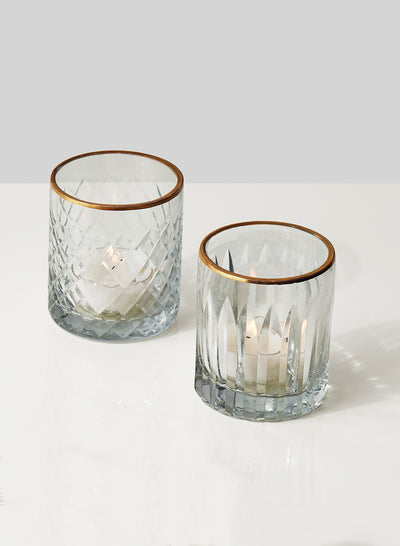
Limiting your colors can make a room feel flat unless the materials vary. Pair shiny glass ornaments with matte ceramic. Tie soft velvet ribbon onto prickly greenery. Set mercury glass on bare wood so the shine has something rough next to it. Brass or gold-tone candleholders look richest with foliage tucked around the base. Pieces from our mercury glass collection are useful here because the mottled finish works with both silver and gold palettes.
Keep Your Own Style
None of this should erase your house. If you have your grandmother's ceramic tree or a box of salt-dough stars the kids made, use them. Things with a story usually look better than anything bought to match.
If a traditional piece feels tired, try moving it before you replace it. The nutcrackers that always stand on the mantel might look new again on the stairs or a kitchen shelf.
How to Decorate a Christmas Tree Step by Step
For a lot of people, how to decorate for Christmas really means how to decorate the tree. In most homes it anchors the main living space. It's the tallest, brightest thing in the room and the first place people look, so it's worth doing in the right order.
Choose the Right Tree and Where to Place It
Measure before you buy or unbox. You need the ceiling height minus about a foot for the topper and stand, and the width of the spot at the tree's widest point. Leave a clear walkway around it, and don't block a door, a vent, or the sofa's view of the television unless you want to hear about it until New Year's.
Real trees bring scent and a slightly irregular shape that many people love. Artificial trees are tidier and reusable, and pre-lit versions save the most tedious step. Whichever you choose, spend time shaping it. On an artificial tree that means opening every tip, working from the trunk outward. It takes half an hour and makes a cheap tree look expensive.
Install Christmas Lights
Plug in every strand before it goes anywhere near the tree. Then check that all of them are the same color temperature, because one cool-white strand among warm ones is surprisingly obvious at night.
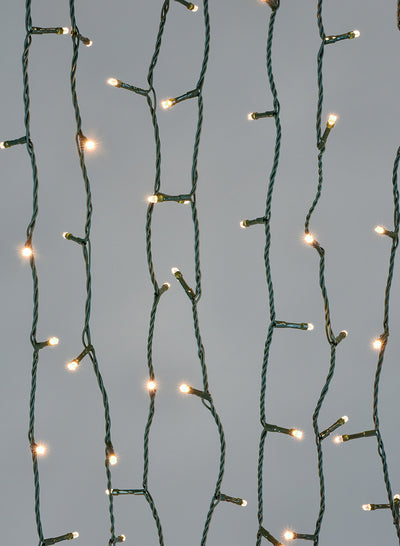
Work the lights into the branches instead of circling the outside. Start near the trunk at the bottom, run each strand out along a branch and back in, and move up. Lights placed deep in the tree make it glow from within. A rough guide is 100 bulbs per foot of height, more if you like it bright. Our Christmas lights collection includes warm white strands in several lengths if you need to add to what you have.
Layer Ornaments
Hang the largest ornaments first and space them evenly around the tree, since they set the overall balance. Fill in with medium ones, then finish with the smallest pieces and anything handmade or sentimental, placed where people will see them up close.
Push some ornaments well inside the branches, especially plain balls in your main color. They catch the inner lights and give the tree depth. And leave a little air. If every inch is covered, nothing stands out, including the ornaments you care about most. If you're short on a particular size or finish, the ornaments we stock come in sets, which makes filling gaps simple.
Add Christmas Picks, Garlands, and a Tree Topper
Step back and look for holes. Artificial pine or fir picks, pushed stem-first into thin spots, fix most of them. After that, add a few accents for contrast: berry stems, magnolia sprays, or metallic leaves. You'll find these in our Christmas picks range, and they go furthest when you group two or three together.
If you're using ribbon or bead garland, drape it now in loose swoops. Choose a topper that fits the tree's scale; a huge star on a slim six-footer looks top-heavy. Last, deal with the base. A skirt, a woven basket collar, or simply a pile of wrapped gifts will hide the stand.
How to Decorate Each Room for Christmas
A lot of advice on how to decorate for Christmas treats every room the same, and that's how houses end up overdone. Rooms don't need equal treatment. Where you gather gets the most, where you pass through gets one strong gesture, and working spaces get very little.
Living Room and Family Room
With the tree done, the mantel is next. Lay a garland along it, let the ends hang a little past the edges, and stand a few candleholders in it at different heights. That may be all it needs.
Elsewhere in the room, think small. A bowl or tray of ornaments on the coffee table. Two or three candle holders grouped on a side table. One or two seasonal pillows and a throw, not a full swap of everything on the sofa. And keep the seats and the paths between them clear, because this room will be full of people.
Entryway and Staircase
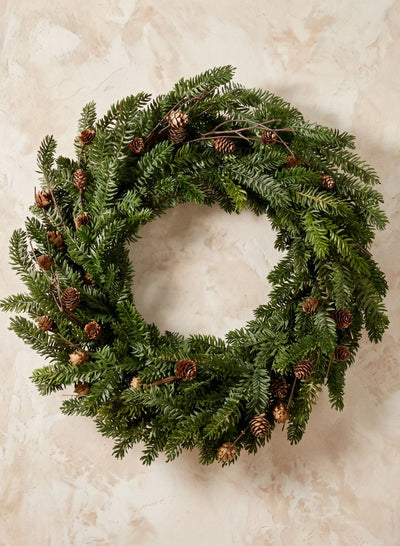
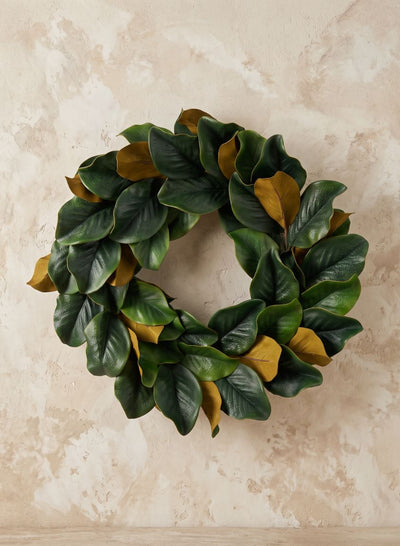
Hang a wreath on the door, or set up a small arrangement on the console inside if you'd rather keep the door plain. Our wholesale wreaths range runs from plain pine to magnolia and berry styles. A tall vase of pine branches or winter berry stems does a lot in a narrow hall and takes two minutes to put together.
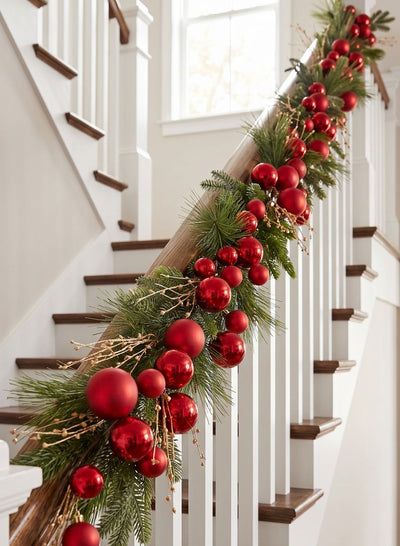
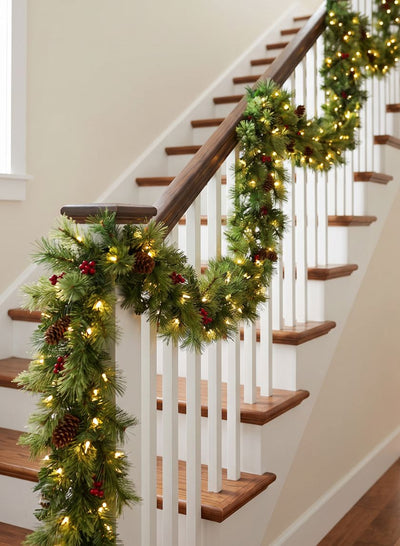
On the stairs, run a garland along the rail and tie it every few feet with ribbon or floral wire. Keep it to the outside of the handrail so people can still hold on, and make sure nothing trails onto the steps or stops the door from opening fully.
Dining Room and Christmas Table
Build the centerpiece low. A strip of greenery down the middle of the table, with votive holders tucked along it, lets everyone see across. If the room has high ceilings and the table feels lost, add one taller vessel in the center or move the height to a sideboard.
Borrow your colors from the tree so the two rooms feel related. Before you call it finished, set out a dinner plate and a serving dish to check that there's still room for the meal. It sounds obvious, and it gets forgotten every year.
Kitchen, Bedrooms, and Smaller Spaces
These rooms need a light touch. A few stems in a bud vase on the windowsill or nightstand. A small wreath on a pantry or bedroom door. In the kitchen especially, protect your counter space, since you'll want every inch of it by the 24th.
Decorate With Christmas Greenery and Natural Elements
If we had to choose a single material to decorate with, it would be greenery, and silk foliage in particular. It works in every room and with every palette, and it's the one thing that makes separate displays feel like they belong to the same house.
Choose Between Real and Artificial Greenery
Fresh greens give you scent and a natural variation in color that's hard to copy. They also dry out and drop needles, and if you put them up in November you'll probably be replacing them before the 25th.
Good artificial greenery has come a long way. Real-touch silk pine and cedar look convincing even at arm's length, they can be handled and reshaped every day without damage, and they never wilt.
Plenty of decorators combine the two. Use artificial pieces for the structure, like the stair garland and the mantel, and tuck in a few fresh sprigs where people will be close enough to smell them.
Style Mantels, Stair Rails, and Tables
For a mantel, center an artificial pine garland and let it run slightly long on one or both ends. Bend the tips in different directions so it doesn't lie flat, then push individual evergreen and berry picks into the garland at an angle, following the direction of the branches so they look like they grew there. The fuller styles in our wholesale garlands range need very little added.
For a quick arrangement, stand three or five branches in a glass cylinder vase. Cut them to different lengths, put the tallest toward the back, and let one lean out. For the table, lay two garlands end to end down the center as a runner, overlap them in the middle, and hide the join with a cluster of pinecones or a candle.
Create Height and Texture With Botanical Picks
Picks are how you change the shape and mood of plain greenery. Tall fir branches in a floor urn fill an empty corner. Pinecone stems break up soft foliage with something rougher. A handful of red berry picks is often the only color a neutral arrangement needs. For a wintry palette, mix in iced eucalyptus or frosted pine, which look cool and pale next to ordinary green.
Create Simple Christmas Arrangements and Focal Points
Stylists call a small, composed grouping of objects a vignette. It's the quickest way to make a shelf, a side table, or a kitchen corner feel finished, and it uses things you probably already have.
Put Together a Christmas Vignette in Ten Minutes
Here's one you can copy. Take a round tray. Stand a tall brass candlestick with an ivory taper at the back. Next to it, put a small vase with three stems of pine. In front, set a low mercury glass votive and scatter two or three ornaments in your main color. You now have something tall, something medium, and something low, in three materials, all on one base.
If it looks crowded, take one thing away. Odd numbers tend to sit better than even ones, and a tray or board underneath keeps the group from looking like items left out by accident.
Display Ornament Collections Outside the Tree
Extra ornaments don't have to stay in the box. Fill a glass bowl or footed compote with balls in one color family and you have a centerpiece. Group similar ones together and keep to one finish or one color so the bowl looks deliberate.
If you collect a particular kind, whether vintage glass, hand-painted, or souvenirs from trips, give a selection its own shelf. Hang them from a bare branch in a vase or line them up on small stands where they can be seen properly.
Make an Elegant Christmas Centerpiece
Centerpieces come in two types. Tall ones lift flowers or branches above eye level on a slim stand or vase, and they suit large rooms, buffets, and round tables at events. Low ones stay under about twelve inches so that conversation can cross the table, which makes them the better choice for most family dinners.
A few that work: a row of bud vases with a single stem each, a shallow bowl of ornaments ringed with cedar, a trio of pillar candles on a bed of greenery, or one generous urn of branches for a sideboard.
Finish Your Christmas Decorating With Lighting and Personal Details
Once everything is in place, turn off the overhead lights and look at the room in the evening. That's when most of the season happens, and it's when the last adjustments become obvious.
Add Warm Christmas Lighting
Let the tree be the main source of festive light and build around it. Add lanterns by the hearth or front door, fairy lights threaded through the mantel garland, and battery-operated candles on shelves and in windows where a real flame wouldn't be safe.
Set candleholders near glass and metal, such as a mirror, mercury glass, or a brass tray, so the light bounces and doubles. Keep any real flame well away from greenery, ribbon, and curtains, and never leave one burning in an empty room.
Incorporate Handmade and Budget-Friendly Decorations
Some of the best decorations cost next to nothing. Spend an afternoon making ornaments with the family, even simple ones cut from paper or baked from dough. Fill a bowl with oranges or red apples, pile pinecones in a basket, or string slices of dried citrus across a window.
Wrap gifts in plain brown paper and tie them with ribbon in your palette, and the pile under the tree becomes part of the decor. Save good ribbon and trimmings every year. They're easy to reuse.
Add Final Personal Touches
Finish with the things that make it yours. Stand Christmas cards along a shelf or clip them to a length of ribbon as they arrive. Put together a playlist so there's music when people walk in. Bring out the advent calendar, the stockings with names on them, and the keepsakes that only come out once a year.
FAQs
When should you start decorating for Christmas?
Most people in the US start the weekend after Thanksgiving, though mid-November is common and perfectly reasonable, particularly with artificial greenery. If you're using a fresh tree, wait until late November or early December so it lasts through the holiday. The planning should begin earlier, about eight weeks out, so that decorating day is just assembly.
How do you prepare for Christmas without feeling overwhelmed?
Split the work across weeks and give each week one job. Budget and inventory in late October, ordering in early November, the tree and main rooms in mid to late November, and small finishing touches in December. Write the list down.
How can you decorate a small home for Christmas?
If you're working out how to decorate for Christmas in a small space, go vertical and stay selective. A slim or tabletop tree, a wreath on the door, a garland over a doorway or along a shelf, and one arrangement on the table are enough for an apartment. Use walls, windows, and door frames instead of floor space, and keep to a tight palette so the room doesn't feel busy.
How can you decorate for Christmas on a budget?
Reuse first, and spend only on what's missing. Put money into the pieces that get the most attention, usually lights and one good garland, and fill in with natural and handmade things: pinecones, branches from the yard, dried orange slices, paper stars.
Can you mix real and artificial greenery for Christmas?
Yes, and many professionals do. Use artificial garlands and wreaths as the long-lasting base and add fresh cuttings close to where people sit or walk past. The fresh pieces provide the scent, and the artificial ones keep their shape all month. Choose similar varieties, pine with pine or cedar with cedar, so the mix isn't noticeable.
How do you decorate a mantel for Christmas?
Begin with a garland as the base and let it drape a little at the ends. Add height with candlesticks or lanterns, placed off-center or in uneven groups. Then tuck in a few picks or ornaments in your palette. Keep stockings and anything flammable clear of a working fireplace, and resist the urge to fill every inch.
When should you take down Christmas decorations?
Tradition says Twelfth Night, January 5 or 6. In practice, most households pack up sometime in the first week of January. Fresh trees should go once they stop taking water and the needles drop freely. Artificial pieces can stay as long as you're still enjoying them.
Conclusion
Knowing how to decorate for Christmas comes down to a handful of decisions made in a sensible order. Plan early, clear the space, choose your colors, do the tree, then work outward through the rooms with greenery, a few small arrangements, and soft light. If you only have time for half of it, do the tree, the mantel, and the table, and let the rest go.
When you're ready to gather supplies, browse the full Christmas collection at Jamali Garden for ornaments, greenery, lights, and vessels chosen with both events and homes in mind.